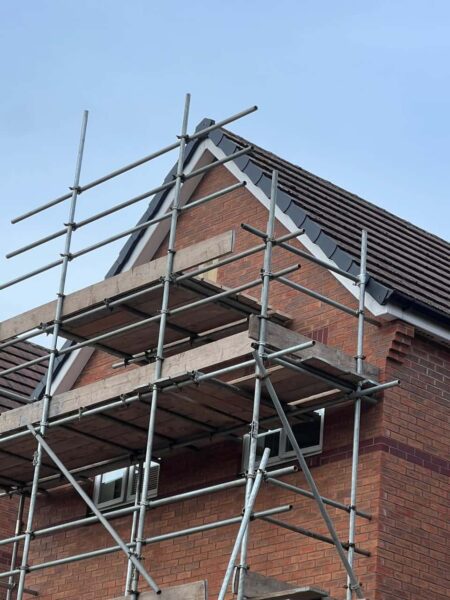
Why Do Pitched and Gable Roofs Develop Leaks Around Their Most Vulnerable Areas?
Pitched and gable roofs are designed to shed rainwater efficiently, but their performance depends on more than the main covering of tiles or slates. Edges, junctions and changes in direction must all remain secure and weather-resistant. When one of these details deteriorates, water can enter even though most of the roof remains sound.
For property owners in Cranfield, Bedfordshire, recognising where leaks commonly begin can help prevent moisture from spreading through the roof space. The visible damp patch indoors may not sit directly beneath the original defect, which makes an accurate assessment particularly important.
Where Pitched and Gable Roof Leaks Commonly Develop
Large, uninterrupted roof slopes are generally effective at directing rain towards the guttering. Vulnerable areas tend to occur where materials meet, terminate or change angle. These sections contain more joints and fixings and may experience greater exposure to wind-driven rain.
A reliable repair must identify both the point where water is entering and the reason the detail has failed.
Ridge Tiles at the Highest Point
Ridge tiles cover the joint where two pitched roof slopes meet. Their exposed position means they experience strong winds and repeated changes in temperature.
Cracked mortar, weakened mechanical fixings or movement in the ridge tiles can create gaps. Rain may then reach the underlay or supporting timbers beneath the ridge.
A ridge tile can appear correctly positioned from ground level while still being loose. Movement should be addressed before the tile becomes further displaced or allows repeated water ingress.
Verges Along the Gable Edges
The verge is the outer edge of a roof adjoining the gable wall. It protects the ends of the battens and underlay while helping to prevent wind-driven rain from entering beneath the covering.
Mortared verges can develop cracks or lose adhesion over time. Dry verge components may also move if their fixings weaken or surrounding tiles become damaged.
Because the verge is directly exposed to wind, a small weakness can gradually worsen. Loose material, visible gaps or crumbling mortar along the gable edge should therefore be investigated.
Valleys Where Roof Slopes Meet
Where two sloping roof sections form an internal angle, the resulting valley carries a concentrated flow of water. Leaves, moss and other debris can obstruct this route, causing rainwater to back up beneath nearby tiles.
Valley linings can also split, corrode or become displaced. Mortar used along the edges may crack and leave gaps through which moisture can pass.
Leaks around valleys may affect a broader internal area because water can travel along the lining or underlay before entering the roof space.
Flashing Around Junctions
Flashing forms a weather-resistant seal where the roof meets a wall, chimney or other structure. It must allow for natural movement while continuing to direct water over the roof covering.
Over time, flashing may lift, split, become loose or pull away from the joint. Mortar surrounding it can also deteriorate. Even a narrow opening may admit water during persistent or wind-driven rain.
Temporary surface sealing does not always provide a lasting solution because it may not address movement or failure beneath the visible edge.
Cracked, Loose or Slipped Tiles
Tiles and slates rely on correct overlap to keep water outside the roof. A cracked or displaced unit interrupts this arrangement and may expose the underlay below.
Strong winds, impact, ageing fixings and deterioration of the supporting battens can all cause materials to move. The defect may be difficult to see if a tile has slipped only slightly.
One displaced tile can sometimes be repaired in isolation, but repeated movement in the same section may indicate a wider issue with fixings or battens.
Eaves and Guttering
The eaves form the lower edge of a pitched roof, where rainwater should pass into the guttering. If gutters become obstructed, water can overflow or soak materials behind them.
Damage to the lowest section of underlay can also prevent water from draining correctly into the gutter. Moisture may then affect fascia boards, soffits and the edge of the roof structure.
Staining below the gutter line does not necessarily mean the gutter alone is responsible. The relationship between the roof covering, underlay and drainage system should be checked.
Roof Penetrations and Fittings
Vent pipes, roof windows and other fittings interrupt the continuous roof covering. Each requires carefully installed flashing or seals to prevent water ingress.
These details may deteriorate through age, movement or exposure to sunlight and weather. Water can enter around a small failed seal and travel beneath the surrounding tiles before becoming visible indoors.
Inspection should consider the entire fitting rather than applying sealant only where dampness appears.
Damaged Underlay Beneath the Roof Covering
Underlay provides secondary protection when small amounts of water pass beneath tiles or slates. Older underlay may become brittle, torn or sagging, reducing its ability to direct moisture towards the eaves.
A roof can therefore begin leaking even when the visible covering appears largely complete. Damage may only become apparent when the roof space is inspected.
Where water has entered repeatedly, the battens, insulation and accessible timbers should also be examined for signs of prolonged dampness.
Warning Signs That Require Attention
Possible signs of a vulnerable roof detail include:
- damp marks on ceilings or upper walls
- staining around a chimney or roof junction
- loose ridge or verge material
- slipped, cracked or uneven tiles
- debris collecting in valleys
- overflowing gutters during rainfall
- damp insulation or timbers in the roof space
- leaks that occur mainly during wind-driven rain
The timing and position of these symptoms can assist diagnosis, but they may not reveal the precise source without a professional inspection.
Conclusion
Pitched and gable roofs commonly develop leaks around ridges, verges, valleys, flashing, eaves and roof penetrations because these areas contain joints, edges and changes in direction. They are more exposed to movement and require several materials to work together effectively.
Finding the underlying defect is essential, as the point where water appears indoors can be some distance from where it entered. If you have noticed signs of a roof leak at your property in Cranfield, Bedfordshire, FCB Roofing Cranfield can inspect the affected areas and recommend an appropriate repair. Contact our team to arrange a professional assessment.
Call us on: 01234 981 898
Click here to find out more about FCB Roofing Cranfield
Click here to complete our contact form and see how we can help with your roofing needs.